



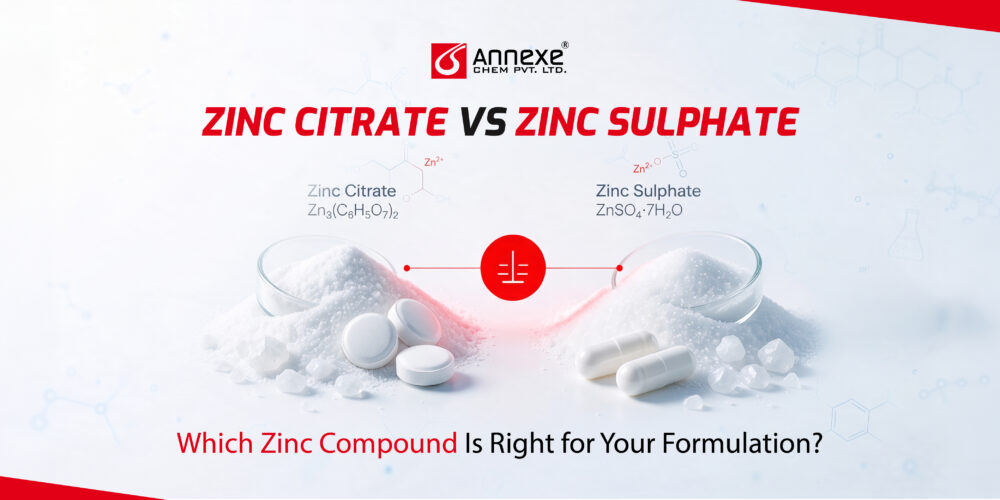
Not all zinc compounds behave the same way in a formulation.
Zinc citrate and zinc sulphate can both deliver zinc, but choosing between them isn’t simply a matter of picking the cheaper or more readily available option. Their differences in solubility, elemental zinc content, taste, stability, and formulation compatibility can directly affect the final product.
So, which one is the better choice? Zinc citrate or zinc sulphate?
Let’s compare the two and see which fits your formulation requirements best.
What Is Zinc Citrate?
Zinc citrate is a zinc salt of citric acid, commonly used as a zinc source in dietary supplements, pharmaceuticals, and oral care products. It provides elemental zinc while offering good stability and a relatively mild sensory profile compared with some other zinc salts. Its properties make it suitable for formulations where factors such as taste, dosage, and ingredient compatibility need to be considered.
What Is Zinc Sulphate?
Zinc sulphate is an inorganic zinc salt widely used as a source of elemental zinc in supplements, pharmaceutical products, animal nutrition, and other industrial applications. It is available in different forms and is known for its good water solubility, making it useful in formulations where rapid dissolution is important. Its higher elemental zinc content and cost-effectiveness can also make it an attractive option for certain applications.
Zinc Citrate vs Zinc Sulphate: Key Differences
Although both zinc citrate and zinc sulphate are used as zinc sources, they differ in properties that can affect formulation performance. Understanding these differences can help manufacturers select the compound that best fits their product requirements.
- Solubility: Zinc sulphate is highly water-soluble, making it suitable for formulations where quick dissolution is important. Zinc citrate has lower water solubility, which may be more suitable for certain solid formulations.
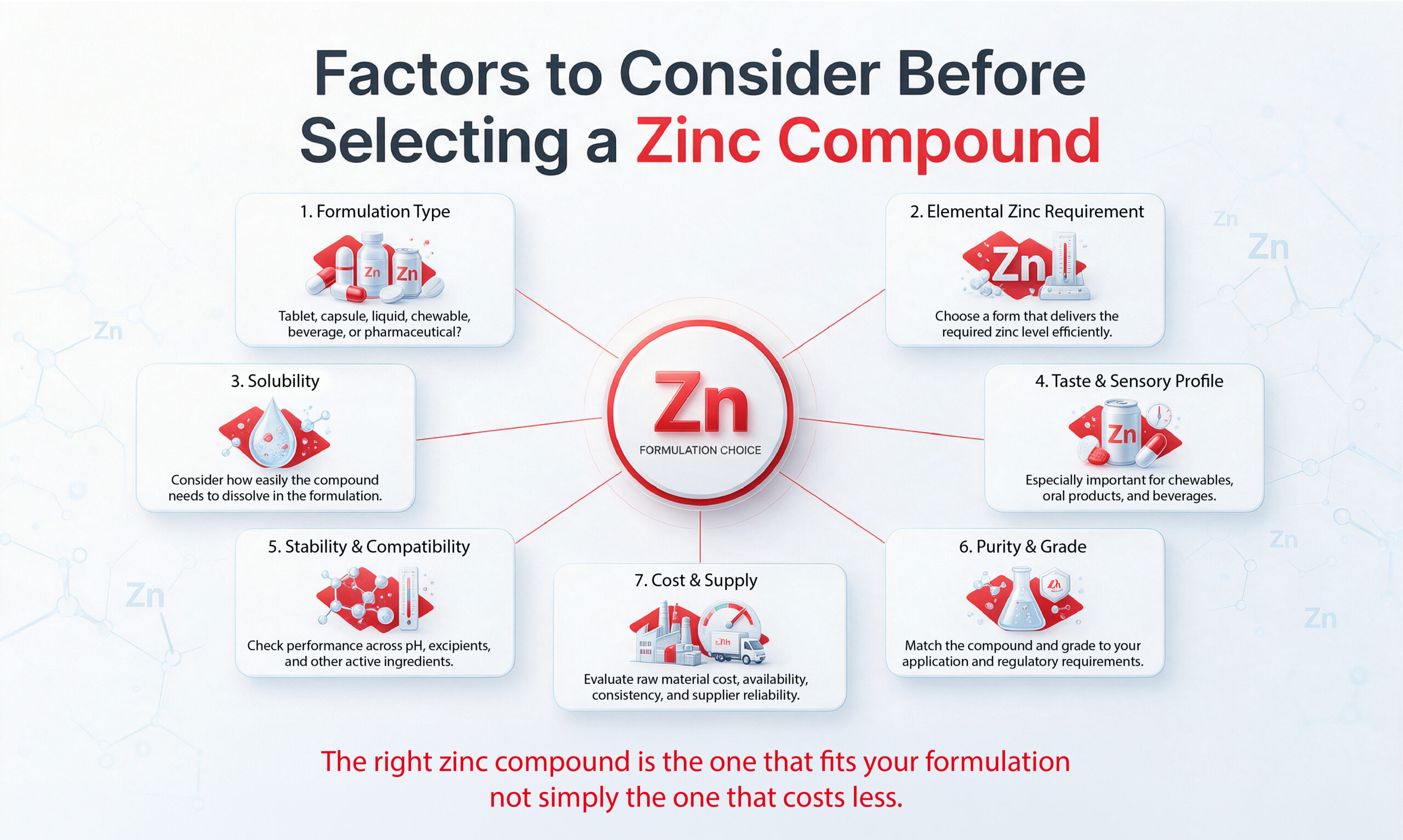
- Elemental Zinc Content: The amount of elemental zinc varies between compounds and their specific grades or forms. This affects the quantity required to achieve the desired zinc level in the final formulation.
- Taste and Sensory Profile: Taste can be an important consideration in supplements, chewables, and oral products. Zinc sulphate can have a more noticeable metallic or astringent taste, while zinc citrate is often considered more suitable when sensory acceptance is a priority.
- Stability and Compatibility: Both compounds can behave differently depending on the formulation’s pH, excipients, and other active ingredients. Compatibility and stability testing are therefore important before selecting a compound for large-scale production.
- Application: Zinc sulphate is commonly used where solubility and cost-effectiveness are priorities, while zinc citrate can be preferred in products where sensory properties and formulation experience are more important.
Ultimately, the choice should be based on the specific requirements of the formulation rather than assuming that one zinc compound is universally better than the other.
Which Zinc Compound Is Better for Different Formulations?
There is no one-size-fits-all answer when choosing between zinc citrate and zinc sulphate. The better option depends on the dosage form, solubility requirements, taste, stability, and intended application.
- Dietary supplements: Zinc citrate can be a good choice when taste and consumer experience are important, while zinc sulphate may be preferred when cost and straightforward zinc delivery are key considerations.
- Tablets and capsules: Both can be suitable. The choice depends on the required elemental zinc level, excipient compatibility, processing conditions, and desired tablet characteristics.
- Liquid formulations and beverages: Zinc sulphate may be considered where higher water solubility is important. However, formulators should also evaluate taste, clarity, stability, and interactions with other ingredients.
- Chewables and oral care products: Zinc citrate can be advantageous when a more acceptable sensory profile is required, particularly in products where taste plays a major role.
- Pharmaceutical formulations: The choice should be based on the specific formulation requirements, including purity, stability, dosage, regulatory specifications, and compatibility with other active and inactive ingredients.
Ultimately, the right zinc compound is the one that performs reliably within the complete formulation, not simply the one with the highest zinc content or lowest cost.
Choosing a Reliable Zinc Compound Supplier
Selecting the right zinc compound is only part of the formulation process. The supplier you choose also plays an important role in maintaining consistent quality, product performance, and supply continuity. Look for a supplier that offers the required grade and specifications, reliable batch-to-batch consistency, proper quality documentation, and dependable delivery.
It is also worth considering a supplier’s ability to provide technical guidance and application-specific support. A reliable partner should understand your formulation requirements and help you identify the most suitable zinc compound for your application, rather than simply supplying a standard product.
For manufacturers, working with an experienced chemical supplier like Annexe Chem can make zinc compound sourcing more consistent and efficient. Choosing between zinc citrate and zinc sulphate comes down to what your formulation actually needs. Solubility, elemental zinc content, taste, stability, application, and cost can all influence the right choice.
The right supplier can make that decision easier by ensuring consistent quality, reliable specifications, and dependable supply.
Looking for the right zinc compound for your formulation?
Connect with Annexe Chem for quality zinc compounds and sourcing support tailored to your requirements.


Choosing the Right Magnesium Compound for.
If selecting a magnesium ingredient feels more complicated than it should, you're not alone. Despite sharing.

Calcium Gluconate: Injectable Formulations & Calcium-Fortified.
Calcium plays a vital role in everything from strong bones and teeth to normal muscle and.