



If selecting a magnesium ingredient feels more complicated than it should, you’re not alone.
Despite sharing the same mineral, magnesium compounds are far from identical. The choice you make can influence product performance, formulation challenges, cost, and even how consumers perceive your brand.
Rather than asking, “Which magnesium is the best?”, the better question is: “Which magnesium is best for the product I’m trying to build?”
This guide answers that question by comparing the most commonly used magnesium compounds and outlining the key factors every formulator should consider before making a decision.
Why the Choice of Magnesium Compound Matters
If you compare magnesium compounds in their use in nutraceuticals, there are quite a few differences, and the results of each are different. The same metal can be made by all of them, but when it comes to absorption of the metal, it is a different story.
So your first decision is what your product really should provide. If you are making a wellness daily product, you would need a magnesium compound that is different from one that you might want for your muscle recovery support or functional drinks. If manufacturers become aware of such differences during the development phase, they can create products that are effective, stable, and meet consumer expectations.
Key Factors to Consider Before Selecting a Magnesium Compound
Selecting a magnesium compound isn’t just about choosing an ingredient; it’s about finding the best fit for your product’s intended purpose, formulation requirements, and target consumers. Here are the key factors every nutraceutical manufacturer should evaluate before making a decision.
- Intended Health Benefit: Start by defining what your product is designed to achieve. Different magnesium compounds are often chosen based on their suitability for specific applications, such as bone health, muscle recovery, stress management, sleep support, cardiovascular health, or energy metabolism. Aligning the ingredient with the product’s intended benefit helps create a more targeted and effective formulation.
- Bioavailability: Bioavailability refers to how efficiently the body absorbs and utilizes magnesium. Since absorption rates vary between different compounds, it’s an important consideration when developing products focused on delivering measurable health benefits. Choosing a form with appropriate bioavailability can enhance the overall effectiveness of the supplement.
- Elemental Magnesium Content: Each magnesium compound contains a different percentage of elemental magnesium; the actual amount of magnesium available in the ingredient. Compounds with higher elemental magnesium may allow for smaller serving sizes, while others may require larger doses to deliver the same amount. Finding the right balance between potency and formulation practicality is essential.
- Solubility: The solubility of a magnesium compound affects how easily it dissolves in liquids and integrates into different dosage forms. Highly soluble compounds are often preferred for products such as drink mixes, syrups, and functional beverages, while less soluble forms may be better suited for tablets or capsules.
- Stability During Manufacturing: A magnesium ingredient should maintain its quality throughout production, packaging, and storage. Factors such as moisture sensitivity, compatibility with other ingredients, and shelf-life stability can all influence manufacturing efficiency and the final product’s consistency.
- Taste and Consumer Experience: For products like gummies, chewable tablets, powders, or ready-to-drink beverages, taste plays an important role in consumer acceptance. Some magnesium compounds have a more neutral taste profile, while others may require additional flavor masking during formulation.
- Cost and Formulation Goals: The ideal magnesium compound should not only meet technical and performance requirements but also align with your product’s budget and market positioning. Premium formulations may prioritize enhanced absorption or specialized benefits, while high-volume products often require a balance between cost, quality, and manufacturing efficiency.
- Quality and Supplier Reliability: Beyond the ingredient itself, the supplier plays a critical role in product success. Choosing a manufacturer that offers consistent quality, regulatory documentation, reliable supply, and technical support helps ensure smooth production and long-term formulation consistency.
How to Choose the Right Magnesium Compound for Your Product?
There is no single magnesium compound that works best for every nutraceutical product. The right choice depends on your product’s intended benefit, formulation requirements, target audience, and manufacturing goals. Instead of asking, “Which magnesium is the best?”, ask “Which magnesium is the best fit for my product?”
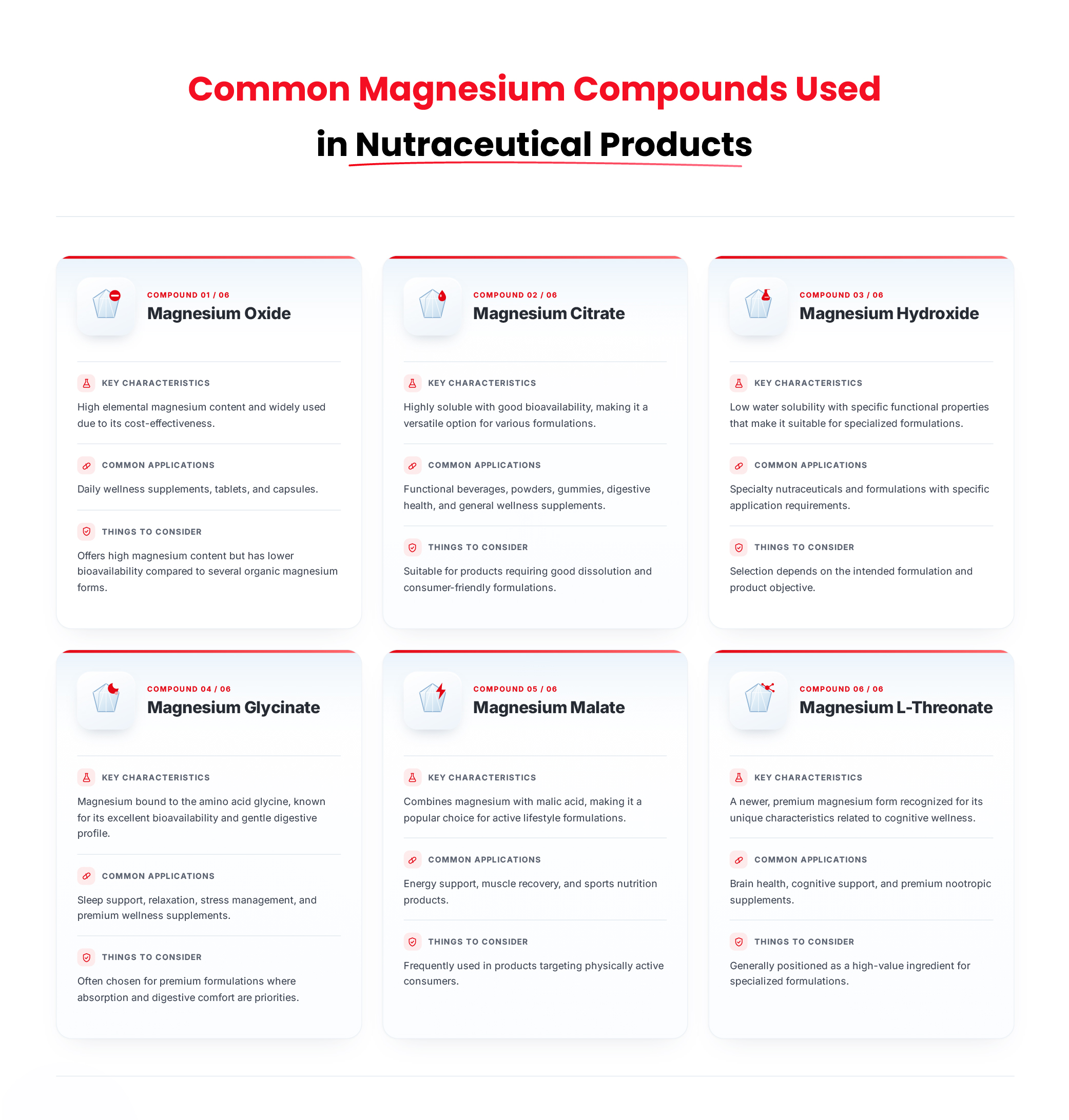
- For daily wellness supplements: Consider Magnesium Oxide if you’re looking for a cost-effective solution with high elemental magnesium. If better solubility and absorption are priorities, Magnesium Citrate is a strong alternative.
- For hydration and functional beverages: Magnesium Citrate is often the preferred choice due to its excellent solubility, making it suitable for drink mixes, powders, and ready-to-drink formulations.
- For sleep and relaxation products: Magnesium Glycinate is commonly selected for formulations focused on relaxation and sleep support because of its high bioavailability and gentle digestive profile.
- For muscle recovery and sports nutrition: Both Magnesium Citrate and Magnesium Malate are widely used in products designed to support active lifestyles, muscle function, and post-workout recovery.
- For premium cognitive health formulations: Magnesium L-Threonate is often chosen for brain health and nootropic supplements, making it a popular option for premium, science-driven formulations.
Ultimately, there is no universally “best” magnesium compound—only the one that best aligns with your formulation goals and delivers the desired consumer experience. Choosing the right ingredient is about balancing performance, practicality, and product positioning to create a successful nutraceutical formulation.
The choice of a magnesium compound should go beyond just providing a mineral; rather, it will be finding a component that works towards your product’s objective, type of dosage, intended consumer group, and product quality standards. In this way, the selection criteria will include availability and assimilation, solubility, amount of the magnesium element, stability, and the way the product can support manufacturers in creating nutraceutical products with not only efficacy but also a great customer experience.
Trying to locate a reliable magnesium raw material supplier? Annexe Chem has a range of high-quality magnesium compounds with a history of quality consistency, technical excellence, and supply dependability. It’s always a good idea to talk to us, whether your project is about bringing out a new formulation or improving an existing one. We will gladly guide you to make the right choice of ingredients for your nutraceutical products. Get in touch with us today to share with us about your formulation requirements.

Zinc Citrate vs Zinc Sulphate: Which.
Not all zinc compounds behave the same way in a formulation. Zinc citrate and zinc sulphate.

Why Traceability Matters in Food &.
Imagine discovering a quality issue in a finished product, but having no way to identify where.