



When sourcing zinc citrate, a product labelled “high purity” may sound reassuring, but is it enough to guarantee quality? Not quite. The real picture lies in the specifications, from assay and elemental zinc content to moisture levels and impurity limits. Understanding these parameters helps manufacturers choose the right grade, maintain formulation consistency, and meet relevant quality standards. In this blog, we’ll break down the key zinc citrate specifications, explain what each parameter means, and explore what to look for when evaluating a reliable supplier.
What Are Zinc Citrate Specifications
Zinc citrate specifications are the quality standards and measurable parameters used to determine whether a product meets the requirements for its intended application. These specifications help manufacturers assess product consistency, purity, and suitability for pharmaceutical or nutritional formulations. Common zinc citrate specifications include:
- Chemical identity: Confirms the compound’s identity and relevant identification details.
- Assay or purity: Measures the amount of zinc citrate according to the specified test method.
- Elemental zinc content: Indicates the proportion of zinc present in the compound.
- Moisture content: Helps assess the product’s moisture levels and storage requirements.
- Impurity limits: Establish acceptable levels of unwanted substances, including relevant elemental impurities.
- Physical properties: Include appearance, colour, and other characteristics specified for the grade.
- Pharmacopoeial compliance: Indicates whether the product meets applicable standards, such as IP or USP.
Reviewing these parameters helps buyers compare zinc citrate grades, verify quality documentation, and select a product that meets their formulation and regulatory requirements.
Key Zinc Citrate Specifications
Understanding zinc citrate specifications helps manufacturers evaluate product quality, maintain formulation consistency, and ensure the raw material meets the requirements of its intended application. While the exact limits may vary depending on the grade and applicable standard, several key parameters are commonly used to assess zinc citrate quality.
- Purity and Assay: Purity and assay are important parameters when evaluating zinc citrate. The assay measures the amount of the specified substance present in a sample according to a defined analytical method and reporting basis.
For zinc citrate, the acceptable assay range depends on the applicable specification, such as the relevant IP or USP requirements. Buyers should check whether the reported result is expressed on a dried basis, as this can affect how the value is interpreted.
A higher assay value does not automatically mean a product is better for every application. The important consideration is whether the product meets the required specification for its intended use.
- Elemental Zinc Content: Elemental zinc content indicates the proportion of zinc present in zinc citrate. This parameter is particularly important for manufacturers producing dietary supplements and pharmaceutical formulations, where the amount of zinc delivered per serving or dosage unit must be calculated accurately.
Zinc citrate contains zinc chemically bound to citrate. Its elemental zinc percentage depends on the compound’s composition and hydration state. Therefore, buyers should not assume that the assay percentage and elemental zinc percentage represent the same measurement.
When reviewing supplier documentation, check the reported elemental zinc content, the analytical method used, and the basis on which the result is calculated. This helps ensure accurate formulation calculations and consistent product performance.
- Appearance, Colour and Physical Form: Appearance is a basic but useful quality parameter for zinc citrate. Depending on the applicable product specification, it may be described in terms of its physical form, colour, and general appearance.
Visual inspection can help identify unusual discolouration, visible foreign particles, or other abnormalities that may require further investigation. Physical characteristics may also influence handling, blending, and processing during manufacturing.
However, appearance alone cannot confirm the chemical identity or purity of zinc citrate. It should be assessed alongside analytical test results and other quality documentation.
- Moisture Content and Loss on Drying: Moisture content and loss on drying (LOD) are parameters used to evaluate water or other volatile material present in a sample, depending on the test method.
Excess moisture can affect powder handling, storage stability, weight calculations, and consistency during formulation. For manufacturers working with moisture-sensitive ingredients or precise ingredient ratios, monitoring this parameter is particularly important.
Loss on drying measures the weight lost under specified drying conditions. It should not automatically be interpreted as water content alone, because other volatile substances may also contribute to the measured loss.
Buyers should check the applicable moisture or LOD limit, the testing method, and any specified storage conditions to determine whether a zinc citrate batch meets their requirements.
- Heavy Metals and Elemental Impurities: Elemental impurities are another important consideration when evaluating zinc citrate, particularly for pharmaceutical and nutritional applications.
Potential impurities, such as lead, arsenic, cadmium, and mercury, may need to be controlled according to the applicable product specification and regulatory requirements. Their acceptable limits depend on factors such as the intended use, route of administration, and relevant standards.
Manufacturers should review the supplier’s quality documentation to confirm that appropriate tests have been performed and that the results meet the required limits. Where necessary, additional testing may be required to demonstrate compliance with the relevant regulatory framework.
A supplier’s general claim of high purity should not replace documented evidence of impurity control.
- Solubility and pH: Solubility and pH can be relevant when assessing zinc citrate for specific formulations. Solubility describes how the material behaves in a particular solvent under defined conditions, while pH measures the acidity or alkalinity of a solution or suspension prepared according to a specified method.
These parameters can influence ingredient compatibility, processing decisions, and formulation development. However, their relevance depends on the intended application and the applicable product specification.
When comparing suppliers, buyers should verify the test conditions and methods used to report these results. This is particularly important because solubility and pH measurements can vary with factors such as concentration, temperature, and sample preparation.
- Chemical Identity and Identification Tests: Before evaluating other quality parameters, manufacturers need to confirm that the supplied material is actually zinc citrate. Identification tests help distinguish the intended compound from other substances and support the verification of product authenticity.
Depending on the applicable standard, identification may involve specified chemical reactions or instrumental analytical methods. The exact tests and acceptance criteria should follow the relevant product monograph or agreed specification.
Confirming chemical identity is a fundamental part of raw material quality control. It helps prevent incorrect materials from entering the production process and supports reliable batch verification.
- Pharmacopoeial Compliance: IP and USP: Pharmacopoeial compliance indicates whether a product meets the requirements of a recognised compendium, such as the Indian Pharmacopoeia (IP) or United States Pharmacopeia (USP), where applicable.
These standards may define requirements for identity, assay, impurities, and other quality parameters. However, buyers should verify the specific monograph, edition, and requirements applicable to the product being purchased rather than assuming that all zinc citrate grades have identical specifications.
For example, Annexe Chem’s zinc citrate product range lists IP and USP options with different stated minimum assay values. Buyers should review the relevant product details and batch-specific Certificate of Analysis (CoA) to confirm compliance with their requirements.
Ultimately, selecting zinc citrate involves evaluating the complete specification rather than relying on a single quality parameter. Assessing assay, elemental zinc content, impurities, physical properties, and applicable standards together helps manufacturers make informed sourcing decisions and maintain consistent quality across production batches.
How to Choose a Reliable Zinc Citrate Supplier
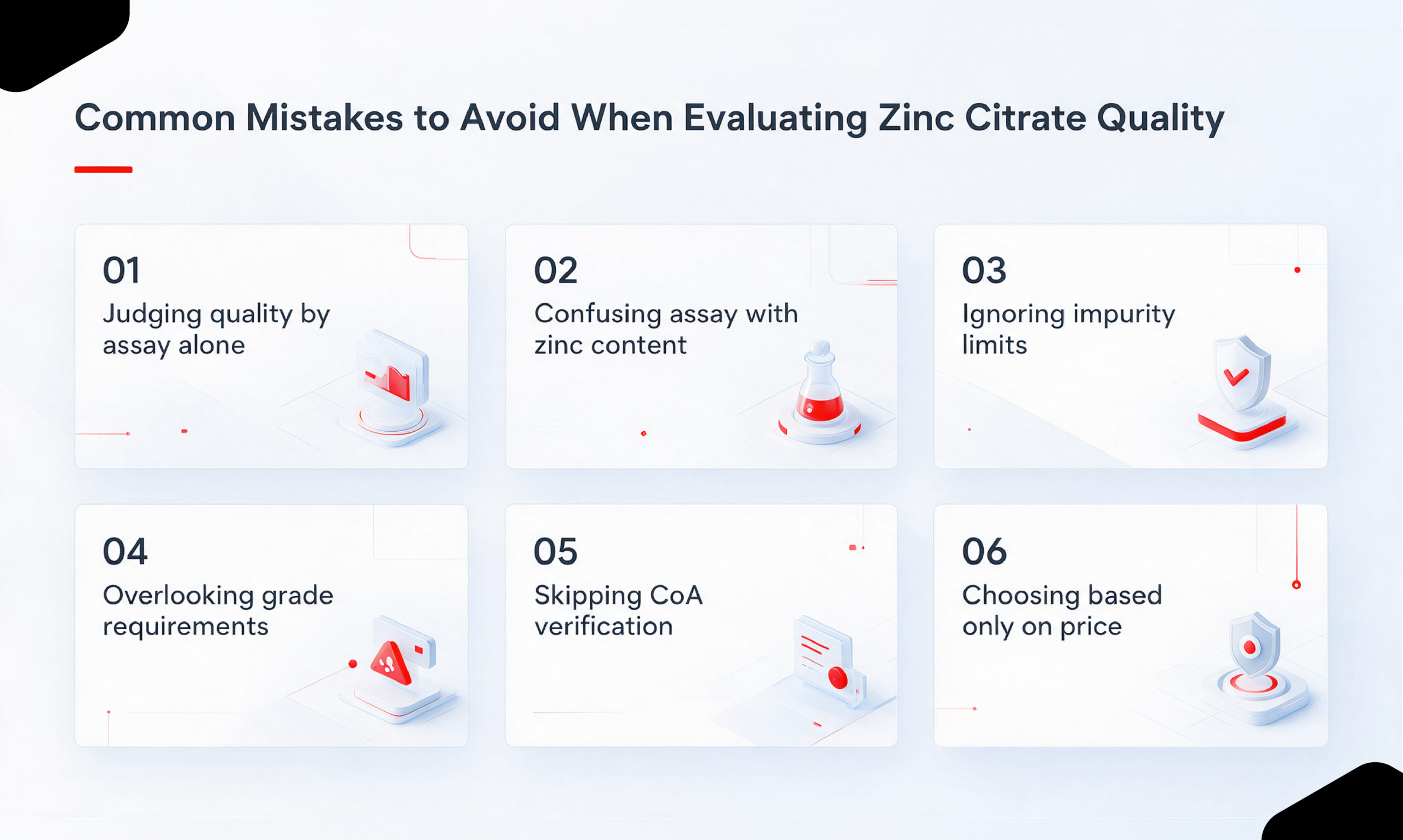
Choosing a reliable zinc citrate supplier involves more than comparing prices. Manufacturers need a supplier that can provide consistent product quality, appropriate technical documentation, and the right grade for their intended application. Consider the following factors before making a sourcing decision.
- Verify product specifications: Check assay, elemental zinc content, impurity limits, and other relevant parameters to ensure the product meets your requirements.
- Check grade compliance: Confirm whether the supplier offers the required grade, such as IP or USP, and verify compliance against the applicable standards.
- Review the Certificate of Analysis (CoA): Request batch-specific documentation to compare actual test results with the stated specification limits.
- Assess quality control practices: Understand how the supplier monitors product quality, tests raw materials, and maintains consistency between batches.
- Evaluate documentation and support: Choose a supplier that can provide relevant technical documents and respond clearly to questions about product specifications and quality requirements.
- Consider supply consistency: Assess the supplier’s ability to meet your quantity requirements, maintain reliable deliveries, and support your ongoing procurement needs.
Why Choose Annexe Chem for Zinc Citrate?
When sourcing zinc citrate, working with a supplier that clearly presents its product specifications can make the evaluation process easier. Annexe Chem offers zinc citrate options listed under IP and USP grades, allowing buyers to explore products based on their specific quality and application requirements. The company provides product information, including stated assay specifications, to help buyers assess suitability before purchasing. By reviewing the relevant product details and confirming batch-specific documentation, manufacturers can make a more informed sourcing decision.
Elemental zinc content can vary between zinc compounds, making it important to understand their composition before selecting a suitable ingredient. Learn more about the differences between zinc citrate and zinc sulphate and how their properties can influence formulation decisions.
Explore Annexe Chem’s zinc citrate range to learn more about its available grades and discuss your zinc citrate requirements with the team.

What do food processing, brewing, and pharmaceutical formulations have in common? The answer may be a.

Why Is Calcium Citrate Becoming Popular.
Calcium supplements have been around for decades, but not all calcium is created equal. Now, consumers.