



In pharmaceutical manufacturing, even the smallest ingredient can have a major impact on how safely and effectively a medicine performs. Behind stable injections, balanced IV fluids, reliable tablets, and effective liquid formulations are specialized compounds that help maintain precision at every stage of drug development. One such essential ingredient is Sodium Dihydrogen Phosphate.
Widely used across the pharmaceutical industry, Sodium Dihydrogen Phosphate plays a critical role as a buffering agent, electrolyte source, and formulation stabilizer. Its ability to control pH levels, improve drug stability, and support formulation consistency makes it a valuable component in a wide range of pharmaceutical products from oral medications to sterile injectable solutions.
As the demand for high-quality pharmaceutical formulations continues to grow, manufacturers are increasingly relying on pharma-grade phosphate compounds that deliver purity, safety, and performance. In this blog, we explore the pharmaceutical applications of Sodium Dihydrogen Phosphate, its key benefits, and why it remains an important ingredient in modern medicine manufacturing.
What is Sodium Dihydrogen Phosphate?
Sodium Dihydrogen Phosphate (SDP), also known as Monosodium Phosphate, is a highly water-soluble phosphate compound widely used in the pharmaceutical industry for its buffering, stabilizing, and electrolyte-supporting properties. With the chemical formula NaH₂PO₄, this compound helps maintain precise pH levels in pharmaceutical formulations, making it an important ingredient in medicines, IV solutions, injections, tablets, and oral liquid products.
Pharmaceutical-grade Sodium Dihydrogen Phosphate is valued for its high purity, formulation compatibility, and chemical stability. It is commonly used as a pharmaceutical buffering agent to improve drug stability and ensure consistent product performance throughout shelf life. Its excellent solubility also makes it suitable for sterile and liquid pharmaceutical applications.
Beyond pharmaceuticals, Sodium Dihydrogen Phosphate is also used in food processing, laboratory chemicals, and industrial applications. However, in pharma manufacturing, strict quality standards and regulatory compliance are essential to ensure product safety, effectiveness, and formulation reliability.
Role of Sodium Dihydrogen Phosphate in Pharmaceuticals
pH Buffering Agent: One of the most important pharmaceutical applications of Sodium Dihydrogen Phosphate is its use as a pH buffer. In pharmaceutical formulations, maintaining the correct pH is critical for preserving drug stability, effectiveness, and shelf life. Even small pH fluctuations can affect the chemical structure of active pharmaceutical ingredients (APIs), reducing their performance or causing degradation over time.
Sodium Dihydrogen Phosphate helps stabilize the formulation pH by resisting sudden changes in acidity or alkalinity. This makes it highly valuable in liquid medicines, oral syrups, ophthalmic solutions, and injectable drugs where precise pH balance is essential for patient safety and therapeutic performance.
In injections and sterile formulations, proper pH control also helps minimize irritation during administration while improving formulation compatibility. Due to its excellent solubility and buffering efficiency, pharmaceutical-grade Sodium Dihydrogen Phosphate is widely used in modern drug manufacturing processes requiring reliable and consistent formulation stability.
Electrolyte Replacement Applications: Sodium Dihydrogen Phosphate also plays an important role in electrolyte replacement therapies. Phosphates are essential minerals required for energy production, cellular function, and maintaining fluid balance within the body. In medical treatments, phosphate-containing compounds are often used to restore electrolyte balance in patients experiencing deficiencies caused by illness, dehydration, or medical conditions.
Pharmaceutical Sodium Dihydrogen Phosphate is commonly used in intravenous (IV) fluids, electrolyte management solutions, and oral rehydration products. These formulations help support patient recovery by replenishing phosphate levels and maintaining metabolic stability.
In hospital and clinical settings, phosphate replacement solutions are especially important for critically ill patients, individuals recovering from surgery, and patients with nutritional deficiencies. Its high solubility and compatibility with aqueous formulations make Sodium Dihydrogen Phosphate an ideal ingredient for fast and effective electrolyte delivery in pharmaceutical and clinical applications.
Tablet & Capsule Formulations: In solid dosage manufacturing, Sodium Dihydrogen Phosphate is often used as a pharmaceutical excipient in tablets and capsules. Excipients are inactive ingredients that support the formulation, stability, and delivery of active drugs.
This phosphate compound helps improve formulation consistency and assists in maintaining the desired chemical environment within the dosage form. It can also support drug dissolution and absorption, helping medicines perform more effectively once administered.
Its stable chemical properties and compatibility with multiple active pharmaceutical ingredients make it suitable for a wide range of oral drug formulations. Manufacturers value pharmaceutical-grade Sodium Dihydrogen Phosphate for its reliable processing characteristics, uniform particle behavior, and ability to contribute to product stability during manufacturing and storage.
As pharmaceutical companies continue developing more advanced drug delivery systems, high-purity excipients like Sodium Dihydrogen Phosphate remain essential for achieving consistent formulation quality and performance.
Injectable & Sterile Formulations: Injectable and sterile pharmaceutical products require extremely precise formulation control, making Sodium Dihydrogen Phosphate a valuable ingredient in parenteral drug manufacturing. It is widely used in injections, sterile solutions, and infusion products where maintaining optimal pH is necessary to ensure drug safety, effectiveness, and compatibility.
In parenteral formulations, incorrect pH levels can lead to reduced drug stability, precipitation, or patient discomfort during administration. Sodium Dihydrogen Phosphate helps maintain stable formulation conditions while supporting the integrity of sensitive active ingredients.
Its high purity and excellent water solubility also make it suitable for sterile pharmaceutical processing environments where contamination control and formulation reliability are critical. Pharmaceutical manufacturers often choose pharma-grade Sodium Dihydrogen Phosphate because it meets strict regulatory and quality standards required for injectable medicines and other high-precision healthcare applications.
Common Pharmaceutical Applications
Oral Pharmaceutical Formulations: Sodium Dihydrogen Phosphate is widely used in various oral pharmaceutical formulations due to its buffering capabilities, solubility, and formulation stability. In syrups and liquid medicines, it helps maintain pH balance, which is essential for preserving flavor stability, drug effectiveness, and shelf life.
In suspensions and oral powders, the compound supports uniform formulation performance and helps prevent chemical instability caused by pH variations. Pharmaceutical manufacturers commonly use Sodium Dihydrogen Phosphate in oral dosage products because of its compatibility with different active ingredients and formulation systems.
Its ability to improve product stability while supporting consistent therapeutic performance makes it an important ingredient in many over-the-counter and prescription oral medications.
Intravenous (IV) Solutions: Intravenous solutions require carefully balanced formulations to ensure patient safety and effective treatment delivery. Sodium Dihydrogen Phosphate is commonly used in IV fluids as part of buffer systems that help maintain stable pH levels throughout storage and administration.
It is also used in electrolyte management solutions designed to restore phosphate balance in patients with deficiencies or metabolic imbalances. In clinical environments, phosphate-containing IV formulations are often used for hydration support, nutritional therapy, and recovery treatments.
The high purity and fast solubility of pharmaceutical-grade Sodium Dihydrogen Phosphate make it suitable for sterile IV applications where formulation accuracy and safety are critical. Its role in maintaining electrolyte stability makes it an important component in modern intravenous pharmaceutical products.
Laxatives & Bowel Preparation Products: Sodium Dihydrogen Phosphate is commonly used in phosphate-based laxatives and bowel preparation products. These formulations are designed to cleanse the intestines before medical procedures such as colonoscopies, diagnostic imaging, and surgeries.
Phosphate compounds work by drawing water into the intestines, helping stimulate bowel movement and effective cleansing. Because of its reliable solubility and formulation performance, Sodium Dihydrogen Phosphate is widely used in bowel preparation solutions that require controlled and predictable results.
Medical professionals often rely on phosphate-based bowel cleansing products for efficient gastrointestinal preparation before procedures. In these applications, pharmaceutical-grade quality and controlled formulation standards are essential to ensure patient safety and product effectiveness.
Nutritional & Supplement Products: In addition to pharmaceutical medicines, Sodium Dihydrogen Phosphate is also used in nutritional supplements and clinical nutrition products. Phosphates are essential nutrients that support bone health, energy metabolism, muscle function, and cellular activity.
The compound is commonly included in mineral supplements, electrolyte formulations, and medical nutrition products designed for patients requiring nutritional support. In clinical settings, phosphate supplementation may be used for patients recovering from illness, surgery, or nutritional deficiencies.
Its high bioavailability and excellent water solubility make Sodium Dihydrogen Phosphate suitable for both oral and liquid nutritional products. As demand for healthcare nutrition and medical supplementation continues to grow, pharmaceutical-grade phosphate ingredients remain important for developing safe and effective nutrition-based formulations.
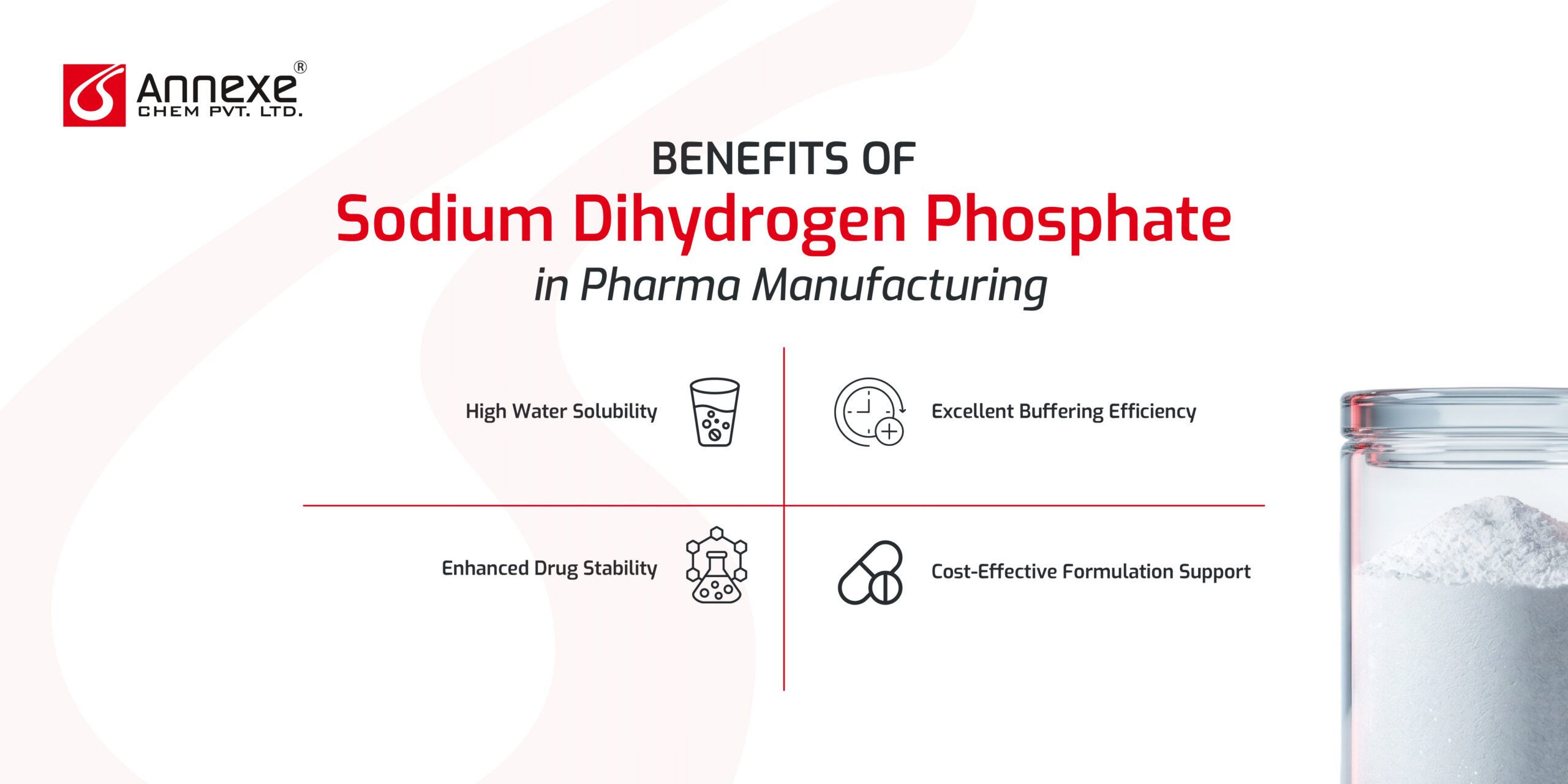
Sodium Dihydrogen Phosphate continues to play a critical role in modern pharmaceutical manufacturing due to its excellent buffering efficiency, high solubility, formulation stability, and compatibility with a wide range of pharmaceutical applications. As the pharmaceutical industry continues to demand high-purity raw materials and reliable excipients, the importance of choosing quality phosphate compound suppliers becomes even more critical. Manufacturers require ingredients that meet strict regulatory standards while supporting stable, scalable, and efficient drug production processes.
At Annexe Chem, we supply high-quality pharmaceutical-grade chemicals designed to meet the evolving needs of the healthcare and pharmaceutical sectors. Our commitment to quality, consistency, and compliance helps pharmaceutical manufacturers develop safe and reliable formulations with confidence.
Looking for a trusted supplier of pharmaceutical-grade Sodium Dihydrogen Phosphate and specialty phosphate chemicals?
Connect with Annexe Chem today to discuss your pharmaceutical raw material requirements and discover reliable chemical solutions tailored to your industry needs.

Top Applications of Potassium Chloride in.
A single ingredient is quietly transforming both the food and pharmaceutical industries, and it’s not getting.

A Complete Guide to Di Sodium.
Keeping the quality, consistency, and stability of items from pharmaceuticals to packaged foods is a typical.