



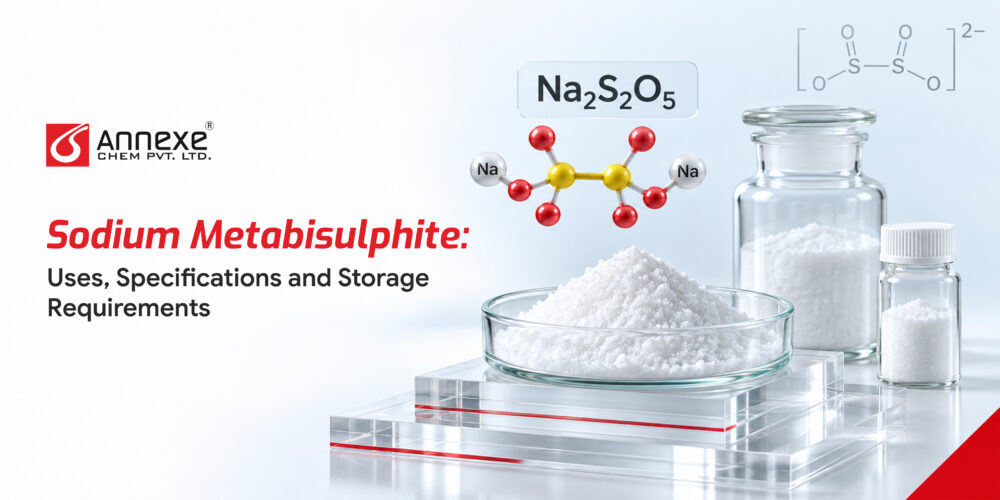
Sodium metabisulphite, with its numerous properties, is used in the chemical, food, and textile industries, as well as in various applications involving water treatment and air pollution control. Sodium metabisulphite is a powerful antioxidant as well as a strong reducing agent and preservative; hence, it is used in the production of such products where good product stability, preservation, and process optimization are required. However, in order to maximize the effectiveness of this compound, one also needs to take into account its purity, chemical requirements, grade, and storage conditions, which are factors that impact its performance and storage life quite significantly.
What Is Sodium Metabisulphite?
Sodium metabisulphite (Na₂S₂O₅) is an inorganic chemical compound widely used as a preservative, antioxidant, and reducing agent across various industries. It typically appears as a white or slightly yellowish crystalline powder with a characteristic sulphur dioxide odour. When dissolved in water, it forms a solution that releases sulphur dioxide, giving it effective antimicrobial and antioxidant properties. Due to its ability to prevent oxidation, control microbial growth, and remove excess chlorine, sodium metabisulphite is commonly used in food processing, water treatment, pharmaceuticals, textiles, and chemical manufacturing.
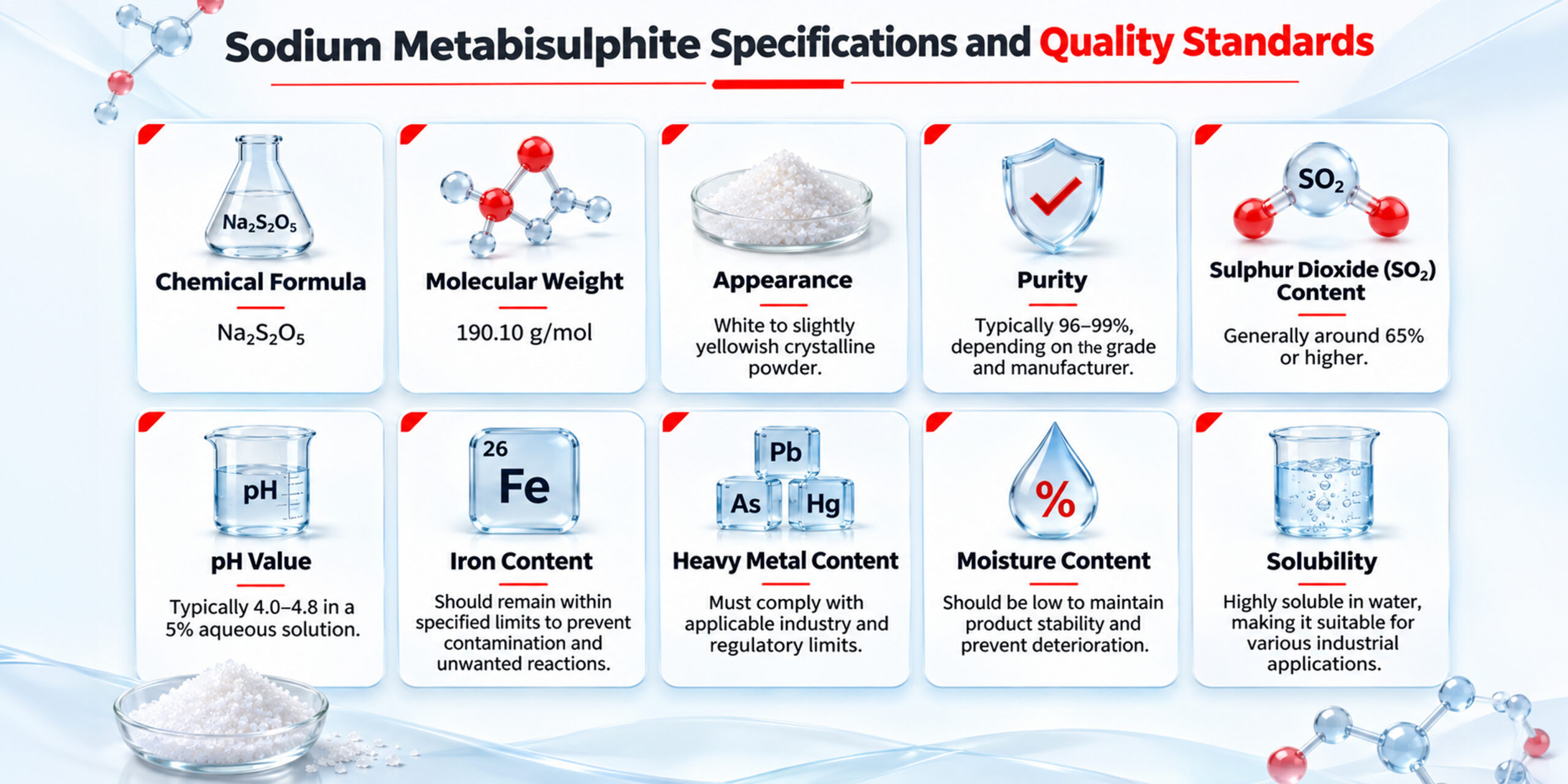
Major Industrial Uses of Sodium Metabisulphite
Sodium metabisulphite is widely used across industries because of its antioxidant, preservative, and reducing properties. Its ability to prevent oxidation, control microbial growth, and remove unwanted chemical residues makes it valuable in several industrial processes.
- Food and Beverage Industry: Used as a preservative and antioxidant to prevent browning, maintain product quality, and extend the shelf life of products such as dried fruits, juices, and certain beverages.
- Water Treatment: Helps remove residual chlorine from treated water and wastewater. It is also used to neutralize excess oxidizing agents before water is released or reused.
- Pharmaceutical Industry: Acts as an antioxidant in certain pharmaceutical formulations, helping protect sensitive ingredients from oxidation and maintain product stability.
- Textile Industry: Functions as a reducing and bleaching agent in textile processing. It is also used to remove excess dyes and residual oxidizing agents from fabrics.
- Pulp and Paper Industry: Supports bleaching and dechlorination processes by removing residual chlorine and other oxidizing substances during paper manufacturing.
- Mining Industry: Used in mineral processing, particularly in cyanide detoxification, where it helps reduce residual cyanide in mining wastewater and tailings.
- Chemical Manufacturing: Serves as a reducing agent in various chemical reactions and manufacturing processes, helping control oxidation and facilitate specific chemical transformations.
The versatility of sodium metabisulphite makes it an important industrial chemical. However, its effectiveness depends on selecting the appropriate grade and concentration for the intended application.
Storage Requirements for Sodium Metabisulphite
Proper storage is essential to maintain the quality, stability, and effectiveness of sodium metabisulphite. Since it is sensitive to moisture, heat, and air exposure, following the recommended storage practices helps prevent product degradation.
- Temperature and Humidity Control: Store sodium metabisulphite in a cool, dry place, away from direct sunlight, excessive heat, and moisture. High humidity can cause the product to deteriorate over time.
- Proper Packaging: Keep the chemical in tightly sealed, moisture-resistant containers or bags to minimise exposure to air and humidity.
- Adequate Ventilation: Maintain proper ventilation in storage areas to prevent the accumulation of sulphur dioxide gas that may be released under certain conditions.
- Avoid Chemical Contamination: Store sodium metabisulphite separately from acids, strong oxidising agents, and other incompatible substances. Contact with acids can release toxic sulphur dioxide gas.
- Prevent Physical Contamination: Keep storage containers clean, dry, and properly labelled. Avoid transferring the product into unmarked or unsuitable containers.
- Regular Quality Checks: Inspect packaging periodically for leaks, moisture exposure, or damage. Follow the manufacturer’s recommended shelf life and storage guidelines to maintain product quality.
Following these storage requirements helps preserve the chemical properties of sodium metabisulphite while ensuring safer handling and consistent performance across industrial applications.
Sodium metabisulphite is a versatile industrial chemical with applications across food processing, water treatment, pharmaceuticals, textiles, mining, and chemical manufacturing. Understanding its properties, sodium metabisulphite specifications, available grades, and storage requirements is essential for maintaining product quality and ensuring safe, effective use. Choosing the right grade and following proper handling and storage practices can also help improve process efficiency and product stability.
Looking for a reliable source of quality industrial chemicals? Annexe Chem Pvt. Ltd. offers dependable chemical solutions backed by a commitment to quality and consistency. Get in touch with our team to explore your sodium metabisulphite requirements and find the right product for your industrial applications.

Disodium Hydrogen Phosphate Monohydrate: Uses in.
You may not notice it, but phosphate compounds play a quiet role in many of the.
Zinc Citrate vs Zinc Sulphate: Which.
Not all zinc compounds behave the same way in a formulation. Zinc citrate and zinc sulphate.