



Magnesium hydroxide is employed for various purposes starting from neutralization of acidic wastewater to enhancement of the fire resistance properties of industrial materials. It is because of its basic character, very stable composition, and wide range of applicability that magnesium hydroxide has become an indispensable part of the pharmaceutical industry, wastewater treatment, plastics, rubber, and chemical processing.
However, what qualities of magnesium hydroxide make it the material of choice in various kinds of operations? An insight into its physical and chemical characteristics, ways by which it is made, and its role in different manufacturing processes may well be key to unlocking its increasingly crucial position in contemporary technology.
What Is Magnesium Hydroxide?
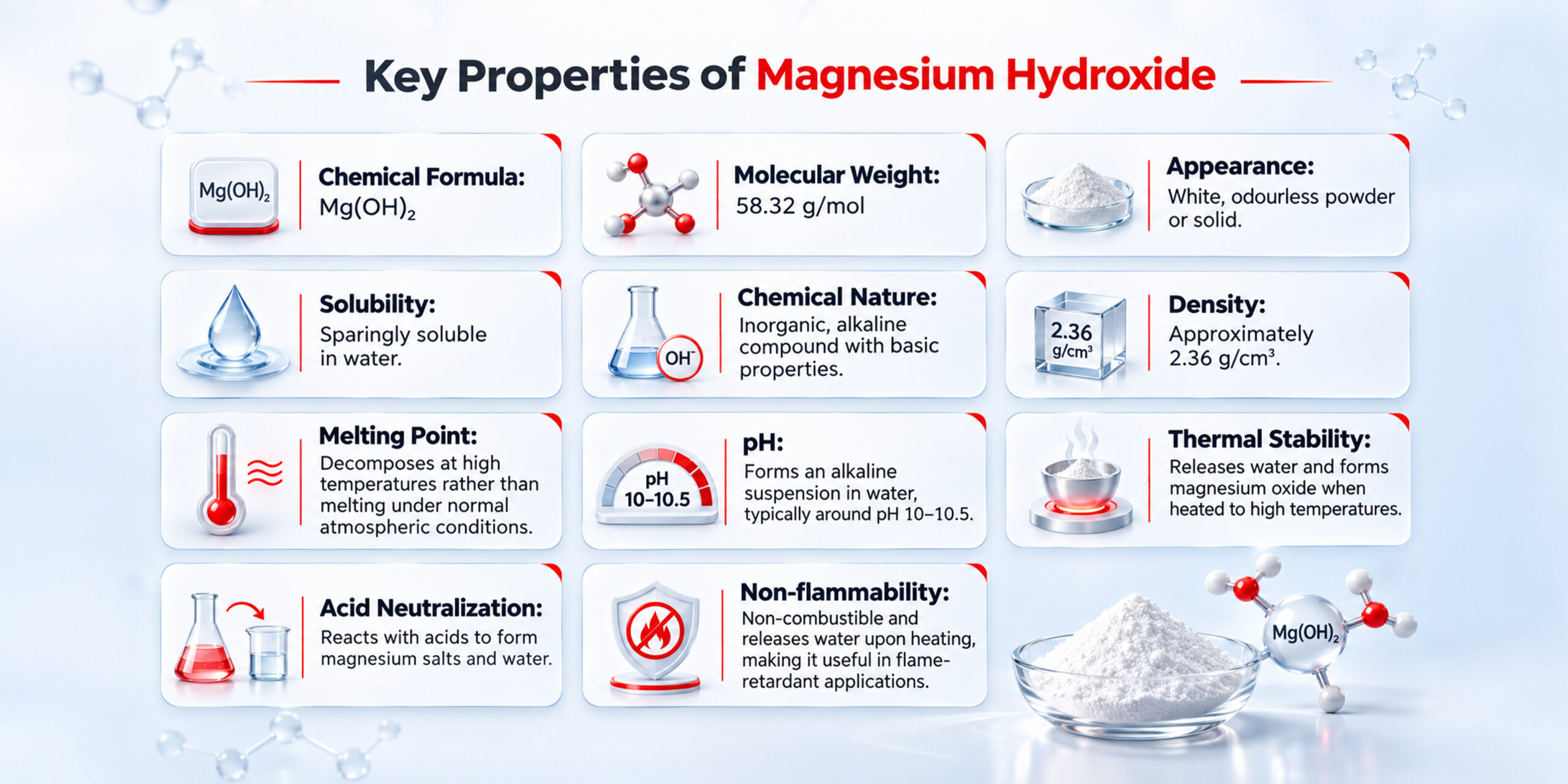
Magnesium hydroxide is an inorganic chemical compound with the formula Mg(OH)₂, consisting of magnesium and hydroxide ions. It naturally occurs as the mineral brucite and is commonly available as a white, odourless powder with low water solubility.
Known for its alkaline properties, magnesium hydroxide is widely used as a neutralizing agent in industrial processes. It is also an important ingredient in pharmaceutical products, water treatment chemicals, flame-retardant formulations, and various manufacturing applications. Its ability to react with acids and release magnesium oxide and water when heated makes it useful across several industries.
Major Uses of Magnesium Hydroxide
Magnesium hydroxide is used across various industries because of its alkaline nature, acid-neutralizing ability, and thermal properties. Its versatility makes it suitable for applications ranging from pharmaceutical products to large-scale industrial processes.
- Pharmaceutical Industry: Used in antacids to relieve heartburn and indigestion by neutralizing excess stomach acid. It is also used as an osmotic laxative to relieve occasional constipation.
- Water Treatment: Helps neutralize acidic wastewater, regulate pH levels, and support the removal of certain heavy metals from industrial effluents.
- Flame Retardants: Used as a flame-retardant additive in plastics, rubber, and polymer products. When exposed to high temperatures, it releases water vapour and forms magnesium oxide, helping slow combustion.
- Pulp and Paper Industry: Used in selected pulp processing operations and wastewater treatment applications to control acidity and maintain suitable pH levels.
- Chemical Manufacturing: Acts as a neutralizing agent in chemical processes and serves as a raw material for producing other magnesium-based compounds.
- Environmental Applications: Helps reduce acidic pollutants in industrial emissions and supports the treatment of acid mine drainage and other acidic waste streams.
Industrial Applications of Magnesium Hydroxide
Magnesium hydroxide is used across industries because of its alkaline nature, acid-neutralizing ability, and thermal decomposition properties. Its versatility makes it suitable for applications ranging from wastewater treatment and chemical manufacturing to pharmaceuticals and food processing. Depending on the intended application, magnesium hydroxide is available in different grades, including industrial-grade, pharmaceutical-grade, and food-grade materials. Each grade has specific purity, quality, and regulatory requirements to ensure safe and effective use. Here are some of the major industrial applications of Magnesium hydroxide:
- Wastewater Treatment: Magnesium hydroxide is commonly used in industrial wastewater treatment to neutralize acidic effluents and maintain the required pH levels. It reacts with acidic substances, helping reduce wastewater acidity before discharge or reuse. It can also support the precipitation and removal of certain heavy metals, making treatment processes more effective. Its relatively low solubility allows for controlled neutralization compared to highly soluble alkaline chemicals.
- Plastic and Rubber Manufacturing: In the plastics and rubber industries, magnesium hydroxide is used as a halogen-free flame-retardant additive. When exposed to high temperatures, it decomposes and releases water vapour while forming magnesium oxide. This process absorbs heat, dilutes combustible gases, and helps reduce smoke generation during combustion. It is incorporated into selected polymer formulations, cables, rubber products, and insulation materials to improve their fire resistance.
- Construction Industry: Magnesium hydroxide is used in certain construction materials and fire-resistant formulations because of its thermal decomposition properties. It can be incorporated into building components, protective coatings, and polymer-based construction products to improve fire performance. Its ability to release water vapour when heated helps absorb heat and slow the spread of flames. It may also be used in specialised cementitious and composite formulations, depending on the required material properties.
- Mining Industry: Mining operations can generate acidic wastewater through processes such as acid mine drainage. This wastewater may contain dissolved metals and other contaminants that can affect surrounding soil and water resources. Magnesium hydroxide helps neutralize this acidity by reacting with acidic compounds and increasing the pH of the water. The resulting conditions can also encourage certain dissolved metals to precipitate, making them easier to separate during treatment.
- Flue Gas Treatment: Magnesium hydroxide is used in industrial flue gas treatment systems to control acidic air pollutants, particularly sulphur dioxide (SO₂). It reacts with acidic gases to form magnesium salts, helping reduce the concentration of pollutants released into the atmosphere. This application is particularly relevant to industries such as power generation, cement manufacturing, and chemical processing, where combustion and industrial operations can produce acidic emissions.
- Agriculture and Fertiliser Manufacturing: Magnesium hydroxide can serve as a source of magnesium in selected agricultural formulations. Magnesium is an essential plant nutrient that supports chlorophyll formation and photosynthesis. It may also be used in specialised soil treatment applications where magnesium supplementation and pH adjustment are required. Its suitability depends on soil conditions, crop requirements, particle size, and the formulation used.
- Chemical Processing and Manufacturing: In chemical manufacturing, magnesium hydroxide serves as a neutralising agent and an intermediate for producing other magnesium-based compounds. It is used in processes that require controlled pH adjustment, acid neutralisation, and chemical precipitation. It can also be processed further to produce magnesium oxide, which has applications in refractory materials, ceramics, and other industrial products.
- Pharmaceutical Industry: Magnesium hydroxide is widely used in pharmaceutical formulations, particularly as an active ingredient in antacids and laxatives. Commonly known as milk of magnesia when formulated as a suspension, it helps neutralise excess stomach acid, providing relief from heartburn, acid indigestion, and upset stomach. It also acts as an osmotic laxative by drawing water into the intestines, helping relieve occasional constipation. For pharmaceutical applications, magnesium hydroxide must meet stringent purity and quality requirements. Pharmaceutical-grade material is manufactured and tested according to applicable pharmacopeial standards to ensure its suitability for medicinal formulations.
- Food Industry: In the food industry, food-grade magnesium hydroxide is used as an acidity regulator and processing aid in applications permitted by relevant food safety regulations. It helps control pH levels during food processing and can serve as a source of magnesium in certain food formulations. Its alkaline properties make it useful in selected processing applications where acidity control is important. Food-grade magnesium hydroxide must comply with applicable food safety standards and purity specifications. Manufacturers must ensure the material meets the regulatory requirements of the intended application before incorporating it into food products.
Magnesium hydroxide, in general, by virtue of its combined chemical characteristics and thermal properties, opens up avenues for its use in various industries. Through acid neutralization, pollution control, and fire resistance support, magnesium hydroxide is becoming an ever more important material in manufacturing processes and environmental management.
Magnesium hydroxide is a highly versatile inorganic compound, used in pharmaceuticals, water treatment, plastic, rubber industry, construction materials, and chemical manufacturing processes. Magnesium hydroxide is characterized by alkaline qualities, acid-neutralizing properties, and thermal decomposition features that make it an ideal component for numerous industrial functions.
Magnesium hydroxide is an important material in many areas of industry, and its use has become essential, especially nowadays, when industrial manufacturers seek environmentally friendly products as well as ways to cut production costs at the same time.
Selecting the appropriate grade and quality of the material is an important step for ensuring that there will be a uniformity of output in the case of various applications. Annexe Chem provides excellent-quality chemical products that meet diverse industrial needs.
Get in touch with Annexe Chem to explore your magnesium hydroxide requirements and find the right solution for your business.

What Is Calcium Sulphate Dihydrate? Key.
Ever wondered what holds your walls together, helps doctors make casts, and even shapes stunning sculptures?.

Zinc Acetate Dihydrate: The Essential Guide.
In a world continually seeking advances in healthcare and industry, minute players often make substantial impacts.